


5 Steps to Maximize Business Value Before You Sell
Most business owners wait too long to think about their exit. They build companies for decades, pouring time and resources into growth, then suddenly decide it’s time to sell. Maybe a competitor makes an unsolicited offer. Maybe health concerns force the issue. Whatever triggers the decision, these owners quickly discover they’re not ready, and that lack of preparation costs them.
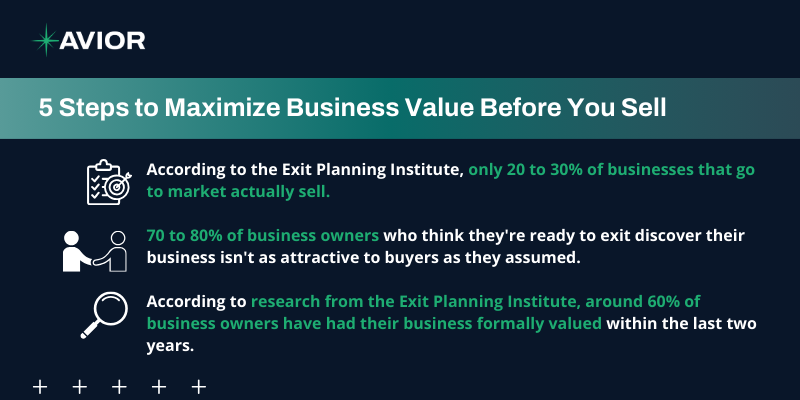
According to the Exit Planning Institute, only 20 to 30% of businesses that go to market actually sell. That means 70 to 80% of business owners who think they’re ready to exit discover their business isn’t as attractive to buyers as they assumed. The difference between a successful sale and a failed one often comes down to preparation. Businesses don’t become sale-ready overnight. The most successful exits result from years of intentional value-building. If you’re thinking about selling within the next three to five years, or even if exit feels further away, these five steps will position your business to command top dollar when the time comes.
Clean Up Your Financials
Buyers trust numbers more than promises. Your financial statements are the first thing serious buyers will scrutinize, and messy books kill deals faster than almost anything else. If your personal expenses are mixed with business expenses, if your accounting methods have changed year to year, if you can’t produce clean financial statements going back at least three years, you have work to do.
Start by bringing in a quality accountant if you don’t already have one. Your tax returns should match your financial statements. Your revenue recognition should follow standard accounting principles. Your expense categories should make sense and be consistent across years. Any unusual one-time expenses should be clearly documented so buyers can adjust their analysis accordingly.
Show Profitability Trends
Buyers pay for future cash flow based on historical performance. A business showing consistent growth looks much more attractive than one with erratic results. If your profits have been declining or fluctuating wildly, figure out why and address it before listing your business. Sometimes this means cutting unprofitable product lines or customers. Sometimes it means raising prices that haven’t kept pace with costs. The specific fixes depend on your situation, but the principle holds: buyers want predictable, growing cash flow.
Reduce Owner Dependency
Too many businesses can’t function without the owner. When you’re the only person who knows how to do critical tasks, who maintains key customer relationships, or who makes all important decisions, your business becomes nearly impossible to sell. Buyers aren’t purchasing a job, they’re purchasing a business that generates income without requiring them to replicate your specific knowledge and efforts.
Document everything. Create operations manuals, standard procedures, and training materials that allow someone else to step into your role. Hire or promote a management team that can handle day-to-day operations. Start delegating the relationships and responsibilities you’ve been holding onto. This process takes time, often years, which is why starting early matters so much.
Build Systems and Processes
Think about McDonald’s. Any location can lose its manager and keep operating because systems run the business. Your company doesn’t need to be that systematized, but it should function smoothly when you’re on vacation for two weeks. Test this. Take extended time away and see what breaks. Those breaking points show you where you need stronger systems, better training, or additional management capacity. Fixing these issues before you sell dramatically increases your company’s value and attractiveness.
Diversify Your Customer Base
A business where one customer represents most of your revenue is risky. If that customer leaves, revenue drops by nearly a third overnight. Buyers understand this risk and will either reduce their offer or walk away entirely. Even if you’ve had long-term relationships with major customers, those relationships belong to you personally, not necessarily to the business.
Work on broadening your customer base years before you plan to sell. Develop marketing systems that generate new leads. Build a sales team that creates relationships independent of you. Consider whether certain large customers are worth keeping if they prevent you from commanding a premium sale price. Sometimes reducing concentration risk means declining to take on additional work from your biggest clients.
Secure Long-Term Contracts
Recurring revenue is gold to buyers. Monthly subscriptions, annual contracts, multi-year agreements, these commitments provide predictability that buyers will pay extra for. If your business operates on one-off transactions, explore ways to create ongoing relationships. Service contracts, maintenance agreements, membership programs, and retainer arrangements all convert unpredictable revenue into streams buyers can model with confidence.
Strengthen Your Competitive Position
Generic businesses sell at lower multiples than companies with clear competitive advantages. What makes your business different from competitors? Why do customers choose you? If your answer is “we provide great service” or “we’ve been around a long time,” you haven’t identified real competitive advantages that transfer to a new owner.
Intellectual property, proprietary processes, exclusive supplier relationships, specialized expertise, unique technology, these create defensible positions that justify higher valuations. Patents, trademarks, and copyrights have obvious value. Less obvious but equally important are things like specialized certifications, regulatory approvals, or trained staff that would take years for competitors to replicate.
Invest in Growth Capacity
Buyers pay for future potential, not just current performance. If your business is running at maximum capacity with no room to grow, buyers will discount their offers accordingly. They want to see opportunities to expand into new markets, launch new products, or scale existing operations. Making strategic investments in capacity, whether that’s equipment, technology, people, or facilities, that demonstrate a growth runway can increase what buyers will pay.
Assemble Your Team
You can’t successfully exit a business alone. The process involves complex legal, financial, tax, and operational considerations that require specialized expertise. Business brokers, M&A advisors, transaction attorneys, CPAs, and wealth advisors each bring critical knowledge that affects whether your sale succeeds and how much you keep after taxes.
Engage these advisors at least a year before you plan to list your business, ideally longer. They’ll identify issues you haven’t considered, suggest strategies to maximize value, and help you avoid costly mistakes. A good advisor team pays for itself many times over through improved deal terms, tax efficiency, and protection against legal problems.
Get a Professional Valuation
Most business owners overestimate what their company is worth. They’ve invested decades and assume that emotional investment translates to market value. It doesn’t. According to research from the Exit Planning Institute, around 60% of business owners have had their business formally valued within the last two years. That reflects growing awareness that knowing your actual value is essential for planning.
A professional valuation gives you a baseline for improvement. Maybe your business is worth less than you hoped, which means you need to either adjust expectations or implement value-building strategies before selling. Maybe it’s worth more than expected, which changes your retirement planning. Either way, you can’t make informed decisions without accurate numbers.
Work With Us
Maximizing business value before you sell requires strategic thinking and long-term execution across multiple areas of your company. The five steps we’ve covered – cleaning up financials, reducing owner dependency, diversifying your customer base, strengthening competitive position, and assembling your team – address the core factors that drive business valuations. Start this work years before your planned exit, not months, and you’ll join the ranks of businesses that actually sell successfully.
At Avior, we work with business owners to integrate exit planning into their comprehensive wealth strategies. Your business likely represents the majority of your net worth, which means the terms and timing of your exit will determine your financial security for decades to come. We help you think through not just the sale process, but what happens after—tax optimization, investment of proceeds, estate planning, and ensuring the sale achieves your personal and financial goals. If you’re a business owner thinking about your eventual exit, schedule a consultation with our team. Let’s make sure your years of hard work translate into the financial freedom you’ve earned.



No Comments
Sorry, the comment form is closed at this time.