


From Chaos to Clarity: Organizing Your Household Cash Flow After a Busy Holiday Season
January arrives with credit card statements that tell the story of December’s generous spirit. Gift purchases, travel expenses, hosting costs, and festive celebrations add up faster than most families anticipate. The holiday season creates a unique cash flow challenge that extends well beyond the decorations coming down and the leftover cookies disappearing from your kitchen counter.
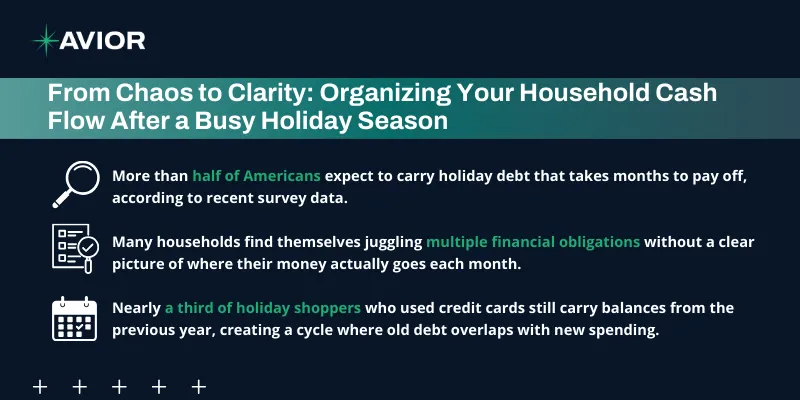
More than half of Americans expect to carry holiday debt that takes months to pay off, according to recent survey data. The bills pile up just as regular expenses like mortgage payments, insurance premiums, and utility costs continue demanding attention. Many households find themselves juggling multiple financial obligations without a clear picture of where their money actually goes each month. Getting your household cash flow organized after the holidays becomes essential for regaining control and setting yourself up for financial success throughout the year.
Start With Complete Visibility
You can fix problems you can see clearly. Gather every financial statement from December and January, credit cards, bank accounts, loan statements, and any other sources of spending or income. This comprehensive view reveals the actual damage and shows patterns you might have missed while caught up in holiday activities.
Create a simple spreadsheet or use budgeting software to list every transaction from the past two months. Categorize each expense into groups like groceries, entertainment, gifts, travel, and utilities. The exercise feels tedious, but the insights justify the effort. You might discover that restaurant meals added $400 to your monthly expenses, or that subscription services you forgot about quietly drained another $150.
Separate Holiday Debt From Regular Obligations
Holiday spending creates two distinct financial challenges. The immediate bills need payment, while your regular monthly obligations continue unchanged. Nearly a third of holiday shoppers who used credit cards still carry balances from the previous year, creating a cycle where old debt overlaps with new spending.
List all debt separately, noting interest rates and minimum payments for each account. Prioritize high-interest credit card balances that cost you money every month they remain unpaid. Calculate how long it would take to pay off each balance making only minimum payments. The numbers often surprise people and create motivation to tackle debt more aggressively.
Build a Realistic Monthly Budget
Now that you understand where money went during the holidays, create a forward-looking budget based on normal monthly expenses. Include fixed costs like housing, insurance, and car payments alongside variable expenses like groceries, gas, and entertainment. Add a category for debt repayment that goes beyond minimum payments.
The 50-30-20 framework provides a helpful starting point: allocate 50% of after-tax income to necessities, 30% to wants, and 20% to savings and debt reduction. Adjust these percentages based on your situation. Someone aggressively paying down debt might shift to 50-20-30, putting more toward financial obligations and less toward discretionary spending.
Automate What You Can
Manual money management requires discipline that many people struggle to maintain consistently. Set up automatic transfers for savings, automatic payments for bills with fixed amounts, and calendar reminders for variable expenses that need review before payment. Automation removes decision fatigue and ensures important obligations get handled even during busy periods.
Consider automating additional debt payments beyond minimums. An extra $100 per month toward a credit card balance compounds over time, saving hundreds or thousands in interest while shortening the repayment timeline. Make these transfers happen on payday before you have a chance to spend the money elsewhere.
Track Progress Weekly
Monthly budget reviews work well for established systems, but households recovering from holiday overspending benefit from weekly check-ins. Spend 15 minutes each Sunday reviewing the past week’s expenses and comparing them to your budget targets. Weekly reviews catch problems early, before small overspending turns into larger issues.
Use this time to update your tracking spreadsheet, review upcoming bills, and plan for any irregular expenses in the week ahead. The consistent attention keeps financial priorities top of mind and makes course corrections easier. You might notice that grocery spending runs high and decide to meal plan more carefully, or realize that entertainment costs crept up and choose free activities instead.
Create Buffer Categories
Rigid budgets break when unexpected expenses arise. Build flexibility into your system through buffer categories that accommodate the irregular costs life throws at you. Car maintenance, medical copays, home repairs, and other surprises happen to everyone. Setting aside even a small amount monthly for these categories prevents them from derailing your entire budget.
Some households prefer a single emergency buffer, while others create separate funds for different types of expenses. Choose whatever system you’ll actually maintain. The goal involves having money available when your car needs new tires or your child requires an unexpected doctor visit, without resorting to credit cards that restart the debt cycle.
Adjust Spending Habits Gradually
Dramatic spending cuts rarely stick long-term. Instead of eliminating all restaurant meals or canceling every subscription immediately, make gradual adjustments that feel sustainable. Cut restaurant visits from eight times per month to four. Keep the streaming services you actually use and drop the ones you forgot you had.
Look for easy substitutions that maintain quality of life while reducing costs. Pack lunch three days per week instead of buying every day. Make coffee at home most mornings rather than stopping at cafes. These small changes add up to significant monthly savings without feeling like major sacrifices.
Work With Us
Organizing household cash flow after the holidays requires clear visibility into spending patterns, separation of holiday debt from regular obligations, and realistic budgets that account for both fixed and variable expenses. Automation handles routine transactions, weekly tracking catches problems early, buffer categories accommodate unexpected costs, and gradual spending adjustments create sustainable change. The process takes effort upfront but establishes systems that serve your family throughout the year.
At Avior, we help clients develop comprehensive financial strategies that address immediate cash flow challenges while building toward long-term goals. Our approach examines your complete financial picture, identifies opportunities to optimize spending and saving, and creates actionable plans that fit your unique situation. Schedule a consultation with our team to review your household finances and explore strategies for managing cash flow more effectively, whether you’re recovering from holiday spending or simply want better control over your money throughout the year.



No Comments
Sorry, the comment form is closed at this time.